The Element Encyclopedia
by Theresa CheungIf you were buying or building a house in your dream, perhaps you are considering making a dramatic change to your life, even to the extent of rebuilding it.
If your dreams focus on paying the rent or the mortgage and this isn’t a problem in waking life, then they are highlighting a responsibility in waking life that you find a burden. An abandoned house in disrepair may suggest emotional and physical neglect, whilst a house that is shuttered up might suggest being blind to what is going on around you. Dreams of an unfinished house should motivate rather than be a cause of despair, as life is a constant work-in-progress. A half-built house suggests what you need to acquire to further your personal development; perhaps more windows to give you a better perspective. A damaged blind or broken lock in your dream can highlight lack of privacy or your perceived vulnerability. A house in bad repair can denote the need to heal a family rift.
Even the most bizarre dream homes reflect the psychological territory you are living in right now, even if that‘home’ is a medieval dungeon, a tropical island, a prisoner-of-war camp or a train station.
If you dreamed of living in a bizarre or fictional setting, consider the condition and qualities of that situation. Is it cramped, crowded or lonely? Your new dream home can give you valuable information about how your current circumstances are affecting you and how you relate to others.
If you are restricted or limited in your dream territory, ask yourself if you are creating those restrictions by your reaction or if the situation is creating it. To see an old, run-down house in your dream represents your old beliefs, attitudes and how you used to think or feel. A situation in your current life may be bringing about those same old attitudes and feelings. Alternatively, the old house may symbolize your need to update your mode of thinking.
If your dream house is unfurnished, this may suggest a bleak self, devoid of feeling; an empty house, however, may indicate new opportunities.
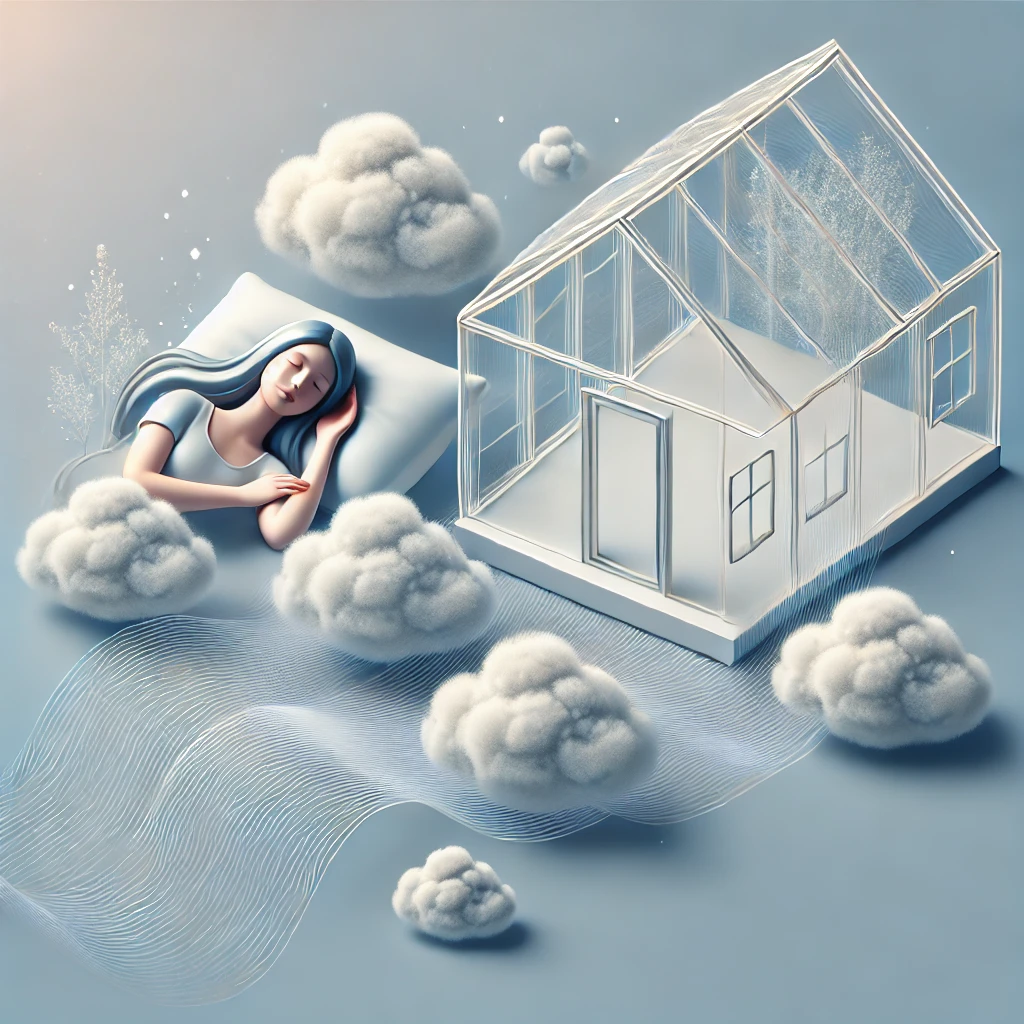
To dream of a haunted house signifies unfinished emotional business, related to your childhood family, dead relatives, or repressed memories and feelings. To see a glass house in your dream signifies that appearances in waking life may be deceptive. To dream that you are living in a glass house signifies the threatened loss of your reputation. To see a mansion in your dream suggests that you need to grow in some way or other; if servants are waiting on you, this indicates undue vanity. You may feel that your current situation or relationship is in a rut and want to expand and develop your potential.
If you see yourself living in a cottage, this signifies a longing for a gentler more spontaneous way of life.
An ancient house could refer to a previous life in some way connected with your present existence.
If you are living in a tent or mobile caravan in your dream, do you feel weighed down by the routine of your life? Would you like to travel, move house, get back to nature or try the life of a nomad for a while? If you imagine your house is in amongst skyscrapers in the city, this suggests a preoccupation with financial matters, perhaps at the expense of your personal life. The opposite is true if your house is in a village in your dream.
Whether your dream home is an igloo or a mansion, pay attention to the details of the dream as it will be like a documentary featuring the interaction of your past beliefs, current challenges and recent situations.
If you don’t like what you see, it is important to understand that you are in charge of your life; sometimes making small changes may be all that is needed to bring big results. Ancient dream-lore has many interpretations for dreams about houses and homes but here are the most typical: country house, tranquility ahead; building a house, you will be self-confident; new house, a busy social life; empty house, low income; moving house, worries about money.
Dream Sight: A Dictionary and Guide for Interpreting Any Dream
by Dr. Michael LennoxDreaming Lens: Did you know the house in your dream? Was it your current home? Was it the home of someone else? What shape was the house in? Did the house represent a shift up or down in the quality of living from your waking life? What were your feelings about the house?
Personal Focus: Houses in dreams are the symbolic representation of the dreamer’s sense of Self. No matter what other imagery or circumstances may present themselves in a dream, a house is always an unconscious expression of your identity. This applies to any home-like dwelling; such as an apartment, hotel room, trailer, grass hut, or any of the possibilities of “home” that exist in the imagination.
The perspective or view of the house takes on specific meaning. The front of a house connects to the persona—the part of you that you show the world—while the back is what is private or hidden. What you discover on the inside reflects various, compartmentalized aspects of yourself. Side views or alternate angles may connect to presenting yourself in the world in a limited, partial, or inaccurate fashion.
The size, style, condition, and reflection of abundance of the house will play a key role in interpreting this symbol in a dream. You will need to consider both the feelings evoked by the house in the dream itself, as well as what comes up for you when comparing it to your actual waking life home. Whatever shades of meaning you glean from your dream, they must be interpreted as reflecting an unconscious expression of Self.
A mansion on a grand scale may indicate a sense of your life getting bigger or opening yourself up to greater levels of abundance. Conversely, this could also be revealing a level of inappropriate grandiosity, depending on your current level of self-esteem. A moment in life that feels constraining and steeped in lack might evoke a dream image of a house that is more hovel than home. Yet, this same image could be a symbolic representation of deeper levels of humility emerging within you.
A new house might mean a new sense of Self is on the horizon, or needs to be. Adding an extension indicates such an expansion may be occurring on a personal level. An older, dilapidated model could represent an outdated view of Self. A house on fire is expressing that powerful levels of transformation are afoot. Whatever the Dreaming Lens is offering you about a house should be incorporated into an interpretation of your sense of self at the time of the dream.
If you dream of a specific home from an earlier time in your life, you are looking at the person you are today as a direct result of what was going on back then. This can refer to occurrences in the environment associated with the home and the people in it, as well as developmental issues based on your age at the time.
A Guide to Dreams and Sleep Experiences
by Tony CrispIf it is a house created by the dream: one’s body and personality in all its aspects.
Inside the house: within oneself. Outside the house and garden: extroversion or the relationship with environment. Ground floor: practical everyday life; sexuality, hips and legs. Basement : unconscious: see basement, cellar. First, other middle floors: internal needs, rest, sleep, hungers; the trunk. Top floor, attic: thinking, the conscious mind, memory, the head: see attic above in this entry. Front of house: our persona, facade; social self; face. Things in house: aspects of one’s feelings and makeup. Other people in^ house: different facets of dreamer. Windows : one’s outlook! on life; how you see others: see larger entry on window below in this entry. People, things coming from downstairs: influences, fears, impressions from unconscious or passions, or from everyday worries. People, things from upstairs: influence of rational self. Attackers, intruders from outside: social pressures or response to criticisms. Repairs, enlargement, renovation: reassessment or change of attitudes or character; personal growth. Damage, structural faults: faults in character structure; hurts such as broken relationship; bodily illness. House falling down, burning: big changes in attitudes; leaving old standards or dependencies behind; sickness: see last example in falling. Cramped house: feeling of need for personal change; feeling restricted in home environment or in present personal attitudes. Kitchen: creativity; nourishing oneself; mother role; diet: see cooking. Living room, personal leisure; space’ to be oneself, everyday life. Dining room: appetites, social or family contact; mental or psychological diet. Bedroom: pnvacy, sex; intimacy, rest: see bed under furniture. Study, library: mental growth, mind. Larder: hungers, sensual satisfaction. Toilet: privacy, release of tension; letting go of emotions, fantasies or desire which we need to discharge: see toilet. Nursery, child’s bedroom: feelings about your children; one’s own childhood feelings and memories. Floor: basic attitudes and confidence; what supports you, such as health and good will of others. Ceiling: boundary of ideas or awareness. Row of houses: other people.
See room; stairs; wall; attic in this entry.